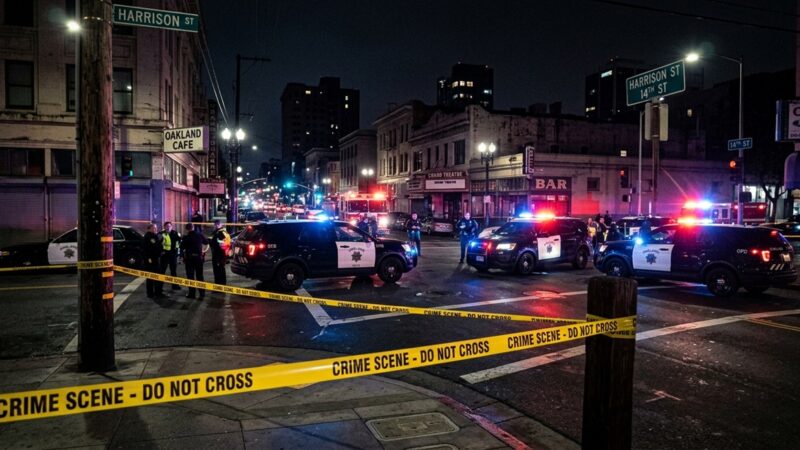
Triple murder near Marseille: At the trial, witnesses’ fear complicates the search for the truth

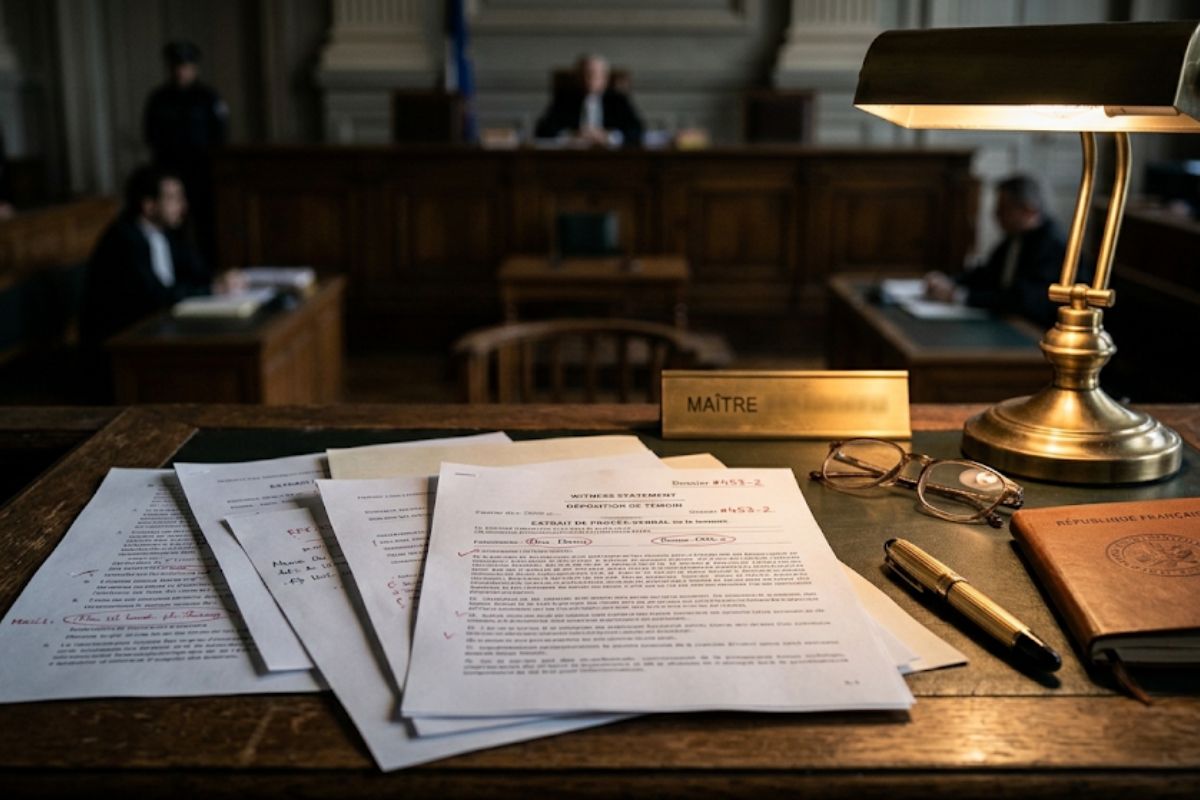
At the trial for the triple murder of Brahim Chabane, Réda Khaldi, and Nassim Loubani—who were killed on the night of December 28–29, 2020, near Marseille—testimony has highlighted a major challenge: several relatives are now less specific than they were at the start of the investigation, while the fear of reprisals weighs heavily on the proceedings. Before the criminal court in Aix-en-Provence, silences and hesitant recollections now take center stage.
Testimonies That Have Changed Over the Years
The testimony of Tahira, Brahim Chabane’s partner, made a particularly strong impression at the October 27 hearing. During her initial interviews in late 2020 and early 2021, she had spoken of her partner’s involvement in drug trafficking, rivalries over sales points, and a debt of 100,000 euros.
Taking the stand several years later, her account is significantly more reserved. The young woman explained that, in the shock of her partner’s death, she had relayed information she had heard from those around her, without being able to confirm all of it. She now describes Brahim as someone who may have carried out occasional tasks, rather than running a vast network.
This shift raises an important question for the judges: how can they distinguish between facts directly known to witnesses, rumors circulating among their acquaintances, and memories reconstructed after several years?
“I value my life”: Fear creeps into the courtroom
Tahira’s unease becomes apparent when she is asked what she knows about her partner’s activities. She explains that she fears for her safety and points out that, in her social circle, certain information is not shared—even within a couple.
Her remarks give a sense of the difficulty of gathering testimony in a case linked, according to the prosecution, to rivalries in Marseille’s drug trade. Fear does not necessarily result in a total refusal to speak; it can also lead to downplaying certain facts, avoiding names, or resorting to vague answers.
The hearing was also marked by tensions and reports of threats surrounding the trial. The atmosphere described in the courtroom underscores just how much the presence of the defendants and the glances exchanged between them can influence the witnesses’ testimony.
A Family Still Coping with Loss
Amid these proceedings, Tahira recalls what is at stake for her beyond the legal case: her daughter is growing up without her father and still struggles to understand his disappearance. The young woman says she wants answers for her child and for Brahim.
Her testimony brings to light a reality that is often less visible in criminal cases: loved ones must simultaneously grieve, answer investigators’ questions, and publicly confront sometimes painful details about the person they have lost.
The account given by Nassim Loubani’s partner, who also testified at the hearing, provides little information about the victims’ activities. She describes a man she loved and explains that she was unaware of the details of his possible involvement in the criminal underworld.
The absence of certain witnesses also complicates the proceedings. Réda Khaldi’s former partner could not be located despite efforts to have her appear in court.
What the court still needs to clarify
Five defendants are on trial in this case. According to the prosecution, the triple murder was allegedly ordered by Karim Harrat—described as an alleged figure in Marseille’s drug-related criminal underworld—with Amine Oualane acting as his liaison on the ground. These details are part of the theories presented to the court and should not be confused with facts that have been definitively established.
The proceedings focus in particular on alleged rivalries, prior threats, and the circumstances of the shooting. Brahim Chabane had survived two assassination attempts during the summer of 2020, one of which left him seriously injured. Videos released shortly before his death are also among the evidence discussed at the hearing.
The trial is scheduled to continue through November 6. Until then, the judges will need to compare the various statements, physical evidence, and witness testimonies to reconstruct the events without drawing hasty conclusions from silences or contradictions.
Marseille: Between Memory and Discovery
To understand this case, one must also look beyond the court hearings and news stories. Marseille is a city of neighborhoods, ports, markets, and Mediterranean landscapes, whose human richness cannot be reduced to the violence associated with drug trafficking. During a visit to Marseille, a stroll through the Old Port, an exploration of the Panier neighborhood, or a trip to the Calanques offers a glimpse of the city’s other facets. Traveling means taking the time to get to know the places and their people, without letting a single story define an entire city.